

Uncategorized
Fake Rolex Watches – America Exclusive Deal
Fake Rolex Watches – America Exclusive Deal
A Buyer’s Verdict on the 2236 Datejust 31 Clone
Contents
- Why the 2236 Movement Decides Whether You Keep the Watch
- 2236 vs 3235 vs Generic Automatic: A Three-Way Comparison
- Clean Factory vs VSF vs ARF on the Datejust 31
- Two Buyer Mistakes That Cost Me Real Money
- Wrist Test vs Macro Test: The Comparison That Actually Predicts Satisfaction
- Where to Buy and How to Read a Seller
- FAQ
I have bought replica rolex watches, worn them daily, opened two of them on a watchmaker’s bench, and sold three of them at a loss. That is the credential behind this article. What follows is not a product description. It is the decision framework I use now, after roughly five years and more money than I care to total, to answer one question: is this specific watch worth buying, and from whom.
The reference in focus is the Datejust 31, and the calibre in focus is the 2236. That combination is where most buyers either get a watch they keep for years or a watch they quietly stop wearing after six weeks. The difference almost never comes down to dial color. It comes down to the movement, the factory that built the case around it, and the seller who shipped it.
Why the 2236 Movement Decides Whether You Keep the Watch
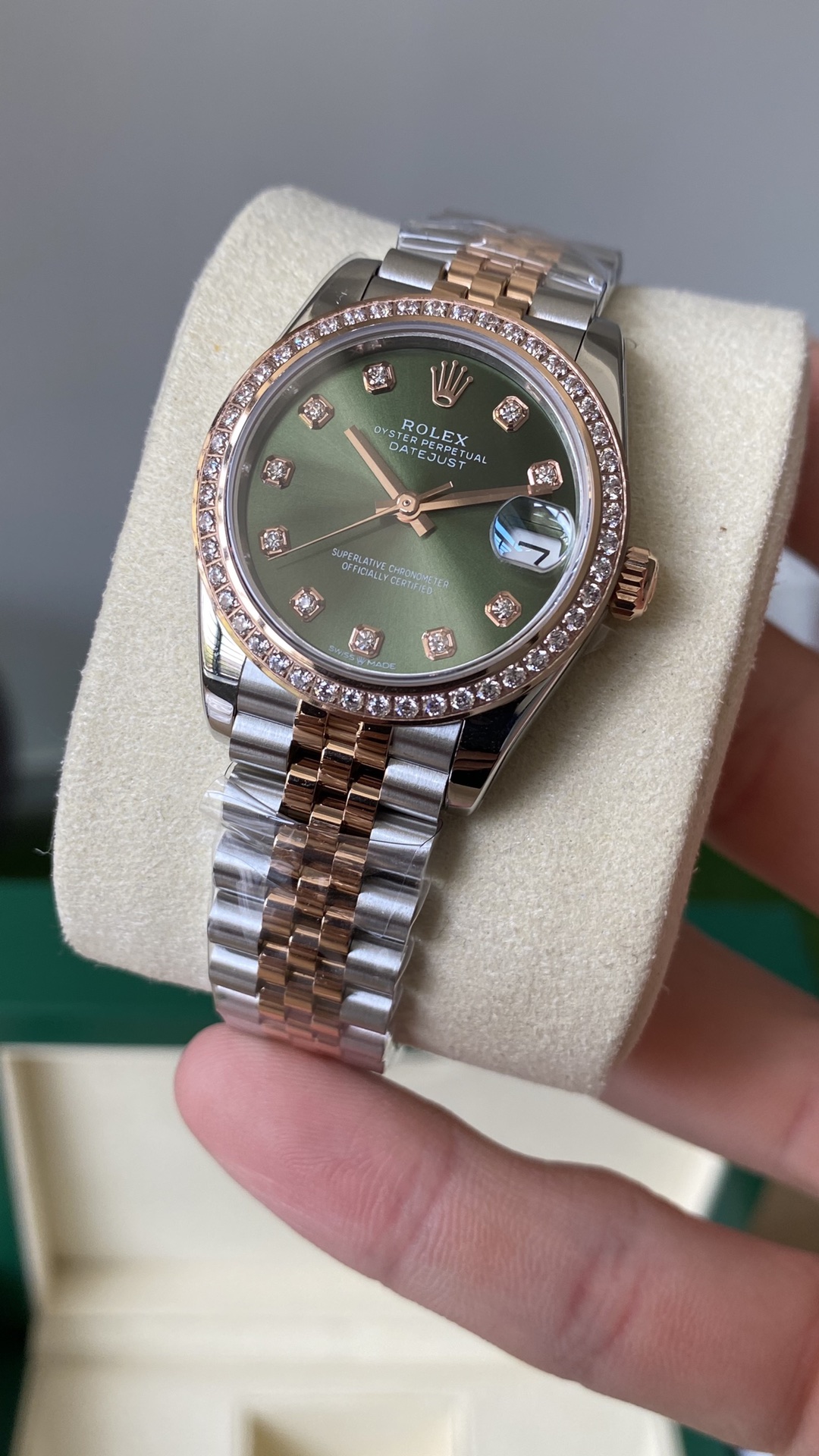
The 2236 is a small automatic calibre that Rolex introduced in 2014 for the Datejust 31 and the Yacht-Master 37. It replaced the 2235, and it was the first Rolex movement to use a Syloxi silicon hairspring, which is antimagnetic, temperature-stable, and far more shock-resistant than a traditional metal hairspring. The genuine version runs at 28,800 vibrations per hour with 31 jewels and roughly 55 hours of power reserve. None of that is trivia. It explains why the Datejust 31 feels the way it does when you wind it, set it, and let it sit over a weekend.
On the replica side, the 2236 clone is the single component that separates a watch you keep from a watch you resell. A properly built clone winds with a smooth, slightly resistant action, holds a charge through a full weekend off the wrist, and changes the date cleanly without the wheel hanging up around midnight. A generic automatic in the same case does none of that reliably. It runs fast in month one, develops a winding stutter in month two, and stops holding a charge by month four. I have watched that exact trajectory happen three times.
The practical consequence is that the movement is not an upgrade option you can bolt on later. It is the foundation. If you buy a cheap Datejust 31 with a generic automatic and plan to swap in a 2236 clone afterward, you will spend more than if you had bought the correct watch the first time, and you will still be dealing with a case and bracelet that were built to a lower standard. The movement decision is made at the point of purchase, and it is effectively permanent.
What the Genuine 2236 Actually Does
The genuine 2236 is a compact, high-efficiency movement designed around a silicon hairspring that resists magnetic fields far better than any conventional alloy spring. That matters because magnetism is the most common cause of a watch running fast in daily life, and it comes from laptops, phones, tablet covers, and bag clasps. A genuine 2236 will typically shrug off magnetic exposure that would throw a traditional movement off by minutes per day. It also delivers approximately 55 hours of power reserve, which means a Friday-night removal will still be running on Monday morning. The date-change mechanism is instant and clean, with no hesitation around midnight, and the winding action is deliberately geared so that manual winding feels precise rather than gritty. These are not marketing points. They are the specific behaviors that owners notice every single day, and they are the reason the 2236 is considered one of Rolex’s better small calibres rather than just a smaller version of something else.
What the Clone Copies and What It Does Not
The top-tier 2236 clone copies the architecture, not the materials. The dimensions, the jewel count, the winding direction, the date-change geometry, and the overall bridge layout are close enough that the movement drops into a genuine-specification case without spacers or modifications. What no replica factory currently produces is the Syloxi silicon hairspring. The clone uses a conventional metal hairspring, which means antimagnetic performance is ordinary rather than exceptional. That is the honest answer to the “is it 1:1” question, and it is the answer most sellers avoid. In day-to-day use, the practical result is a watch that keeps time within roughly plus or minus eight seconds per day, holds between 48 and 55 hours of reserve, and does not need special handling around magnets beyond common sense. What you lose is the extreme magnetic immunity. What you keep is everything else that makes the watch wearable.
2236 vs 3235 vs Generic Automatic: A Three-Way Comparison
Most comparison content pits the 2236 against the 3235 and declares the 3235 the winner because it has a larger number and a 70-hour power reserve. That conclusion is wrong for anyone buying a 31mm case, and it is misleading for anyone who has not physically handled both. The 3235 is a larger movement built for the 36mm and 41mm Datejust platforms. The 2236 exists because the 31mm case cannot accommodate the 3235 without compromises that show up in the caseback profile and the rotor clearance.
So the real comparison is three-way, not two-way. First, the 2236 clone: correct dimensions, smooth winding, 48 to 55 hours of reserve, and a clean date change. Second, the 3235 clone: stronger reserve at around 70 hours, a slightly firmer winding feel, and a marginally louder rotor, but only relevant if the case was built for it. Third, the generic automatic found in sub-$400 fake rolex listings: unspecified reserve, inconsistent rate, and a short service life. The gap between the first and third options is enormous. The gap between the first and second is small and largely determined by case size.
The actual impact on your decision is simple. If you are buying a 31mm Datejust, ignore anyone offering a 3235 upgrade. It is either a mislabeled 2236 clone or a case that has been modified in ways you do not want. If you are buying a 36mm or 41mm, the 3235 clone is the correct choice and the 2236 is not applicable. Matching the movement to the case is the entire exercise, and every seller who blurs that line is doing so to make a listing sound more impressive than it is.
The Fit Problem Nobody Mentions
A movement that does not match its case leaves evidence you can see with the naked eye once you know where to look. The most common sign is a caseback that sits slightly proud of the case, creating a small lip you can catch with a fingernail. The second is a movement ring, the internal spacer that centers the calibre, that has been cut or filed by hand. Under a loupe, hand-cut rings show uneven edges and tool marks. On the wrist, the symptoms are subtler but real: the watch sits higher than it should, the crown can feel slightly off-axis when you wind it, and the rotor may contact the caseback when the watch is inverted. I have handled a “3235 upgraded” 31mm Datejust that had all three symptoms. The seller insisted it was a factory option. It was not. It was a mismatched build, and the buyer had no way to know until the watch was in hand. If a 31mm listing mentions any movement other than the 2236 or its predecessor, treat that as a disqualifying detail.
What Three Months on the Wrist Revealed
Spec sheets do not survive contact with daily wear, so here is what actually happened across three months with a 2236 clone in a Clean Factory case. The watch gained roughly five seconds per day when worn consistently, which is within the range I consider acceptable and close enough that I stopped checking. After being set down on a Friday evening, it was still running and accurate to within about twenty seconds on Monday morning, which confirms the 48-to-55-hour reserve claim in real conditions rather than on a bench. The date changed within a two-minute window around midnight with no hesitation. The winding action stayed smooth, and the crown threaded cleanly every time. The only issue I encountered was a bracelet screw that needed a quarter-turn of tightening after six weeks, which is normal for this platform and takes thirty seconds to fix. Compare that to a generic automatic I owned previously, which lost eleven seconds per day, stopped after 34 hours, and developed a rotor rattle by week five. The difference is not marginal. It is the difference between a tool and a toy.
Clean Factory vs VSF vs ARF on the Datejust 31
The factory question is where most guides go vague, usually because the writer has never had the three watches side by side. I have, and the differences are specific enough to describe rather than hint at. Clean Factory built its reputation on Rolex sports models, and its 904L steel case work carries over to the Datejust 31 in the form of crisp lugs and a properly proportioned fluted bezel. VSF’s strength in this segment is the winding feel of its 2236 clone, which is the smoothest I have handled. ARF sits below both on bracelet finishing but offers a Dandong movement variant with upgraded winding components and a longer reserve at a meaningfully lower price.
| Criterion | Clean Factory | VSF | ARF |
|---|---|---|---|
| Case finishing | Best in class | Excellent | Very good |
| Bracelet articulation | Excellent | Very good | Good |
| Winding feel | Good | Best in class | Good |
| Dial detail | Good | Good | Very good |
| Typical price | $1,300-$1,600 | $1,300-$1,500 | $800-$1,200 |
Where Each Factory Wins and Loses
Clean Factory wins on the parts you see and touch most often: the case, the bezel, and the bracelet. The Jubilee bracelet on a Clean Datejust 31 articulates without the stiffness that cheaper factories leave in the links, and the clasp closes with a solidity that feels correct rather than hollow. Where Clean sometimes loses is dial texture under magnification and the weight of the date-wheel font, both of which are minor and invisible at normal viewing distance. VSF wins on the winding experience, which sounds trivial until you own a watch with a stiff crown and find yourself avoiding it. Its case finishing is a half-step behind Clean, and its bracelet is a half-step ahead of ARF. ARF wins on price-to-quality ratio, and its Dandong movement option is genuinely competitive with a documented upgrade path, but the clasp engraving is shallower than the other two and the link edges feel slightly less refined under a thumb. My recommendation is not a single winner. Buy Clean if case and bracelet are your priority, VSF if winding feel is your priority, and ARF if you want most of the experience at roughly seventy percent of the price. All three are defensible. Buying from an unnamed factory at half these prices is not.
Two Buyer Mistakes That Cost Me Real Money
The first mistake was trusting a product page over a movement photograph. Early on, I ordered a Datejust 31 advertised with a Swiss 2236, and what arrived had no jewel count marking on the rotor, spun with no resistance, and stopped after roughly thirty hours. It was a generic automatic with a calibre sticker. The fix is one step: ask for a movement photo of the actual watch before paying, and look at the rotor engraving, the jewel count, and the bridge finish. If the seller sends a stock image or refuses, the conversation is over. This single habit has prevented more bad purchases for me than any other practice, and it costs nothing but a message.
The second mistake was buying from a seller with no independent footprint. The site looked clean, the price sat slightly below the established sellers, and there was no forum mention, no review page, and no buyer photos anywhere. I paid, the watch arrived three weeks late, and a bracelet screw backed out on day two. The seller stopped responding. That experience taught me that with replica rolex watches, the seller is part of the product, not a separate transaction. A site with no verifiable history cannot be held accountable, and accountability is the only real protection you have in this market. Since then I have stuck to a short list of sources I have actually used, and one of them is replicafactory.cx, which I have ordered from twice with consistent results: movement photos provided before payment, tracking within 48 hours, and a real answer when I had a bracelet sizing question.
Mistake One: Trusting the Listing Over the Movement
Product pages are written to sell, and the movement specification is the easiest thing on the page to fake because most buyers never verify it. A listing can say 2236 clone, Swiss ETA, or 1:1 super clone and mean nothing, because the same calibre name covers movements from several different makers with different tolerances. What actually distinguishes a real 2236 clone from a relabeled generic is visible in a photograph: the rotor engraving depth, the number of visible jewels, the finishing on the bridges, and the presence or absence of a proper movement ring. Asking for that photo takes one message. Skipping that message is how buyers end up with a watch that runs for five weeks and then stops. I now treat any seller who cannot produce a movement photo within a day as a seller who does not have the watch they are advertising, and I move on without further discussion.
Mistake Two: Buying From a Seller With No Track Record
A clean website design costs almost nothing and tells you nothing about whether the seller will still be reachable in three weeks. The signals that actually matter are independent ones: forum threads with buyer photos, review pages with specific complaints rather than generic praise, and a presence long enough that someone besides the seller has commented on it. When I bought from the anonymous site, I had none of those signals, and I paid for it. The watch arrived, but the after-sale relationship did not exist. The opposite experience is worth describing: with replicafactory.cx, the one issue I had was a bracelet that arrived two links short, and the seller shipped the missing links at no charge after I sent a photo. That is not exceptional service. That is baseline competence, and it is rare enough here that it functions as a filter. Use that filter before you pay, not after.
Wrist Test vs Macro Test: The Comparison That Actually Predicts Satisfaction
Most buyers evaluate a fake rolex with what I call the macro test. They zoom into photos, count dial markers, and compare date fonts at ten times magnification. That process is useful for spotting flaws, but it is nearly useless for predicting whether you will enjoy wearing the watch. I have owned a replica that passed every macro test I could apply and sold it after three weeks because the caseback domed slightly and pressed into my wrist bone.
The wrist test asks three questions that no photograph can answer. Does the watch sit flat on the wrist, or does it dig in or float? Does the bracelet taper match the case proportions at conversation distance rather than under a loupe? Does the crown operate without making you aware that you are operating a mechanism? A watch that scores well on the wrist test will get worn for years even if its dial is ninety-five percent accurate. A watch that scores well on the macro test but fails the wrist test will sit in a drawer. The practical implication is that you should weight fit and feel above detail accuracy when choosing between factories, and you should ask sellers for wrist shots on a comparable wrist size rather than flat-lay photos on a foam block.
Why Movement Specs Are Overrated for Most Buyers
Movement specifications as written on a listing predict very little about ownership, for three structural reasons. First, the same calibre name covers multiple production batches with different tolerances, so a 2236 clone from one maker and a 2236 clone from another may share nothing but the label. Second, a movement that tests well on a timegrapher at the seller’s bench can behave differently after shipping, temperature swings, and a month of daily wear. Third, the problems that actually annoy owners are rarely movement specs at all. They are bracelet screws backing out, crown threads stripping, date wheels hanging up, and rotors developing a rattle. What matters more than the spec sheet is whether the movement sits on a known platform with documented parts availability and a track record of being serviced by independent watchmakers. For the Datejust 31, the 2236 clone used by the top three factories meets that bar: it can be serviced, parts exist, and its failure modes are understood. Buy the platform, not the specification. That one shift in thinking will save you more money than any factory comparison.
Where to Buy and How to Read a Seller
A reliable seller does four things without being asked. They send movement photos of the actual watch before payment. They confirm the factory and the movement variant in writing. They provide tracking within a reasonable window and answer follow-up questions. And they stand behind the watch if it arrives with an undisclosed defect. In my experience, replicafactory.cx meets all four, which is why I have used it twice and would use it again. For research, rolexreplicas.us.com organizes its listings by model and factory, which makes it easier to compare how different sellers position the same reference before you commit. Neither replaces the four-point checklist, and neither should be treated as a shortcut around it. The one rule I would never break is chasing the lowest price. A Datejust 31 with a working 2236 clone, a properly finished case, and a bracelet that holds its screws cannot be built and sold profitably at $300. If you see that number, you are looking at a watch that will not match its photos. Pay for the floor, not the fantasy.
FAQ
Is the 2236 clone a true 1:1 copy of the genuine movement?
How long does the power reserve actually last in practice?
Which factory makes the best Datejust 31?
Can a local watchmaker service a 2236 clone?
How do I know a seller is shipping the factory they claim?
Is the Datejust 31 a good first purchase?
What is the biggest red flag when buying fake rolex watches for sale online?
Do rolex fakes at this level hold their value?
